
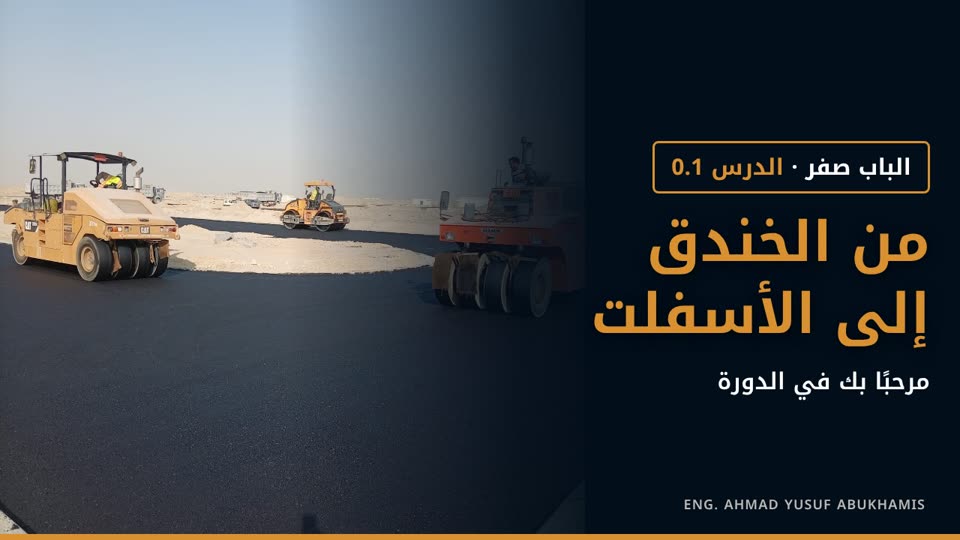
Lesson 0.1Free5:58
Welcome to the course: from the trench bed to the asphalt surface
What the course covers: a tour from the trench bed up to the asphalt, and how its ten units follow the actual execution sequence on site.
Main course
A course built on the book and site experience, ordered by the actual execution sequence: from reading drawings and site preparation to networks, roads, testing and acceptance. Lessons are in Arabic, in Eng. Ahmad’s own voice, with synced Arabic on-screen text.
Free: 10Udemy: 52In preparation: 44
What the course covers: a tour from the trench bed up to the asphalt, and how its ten units follow the actual execution sequence on site.
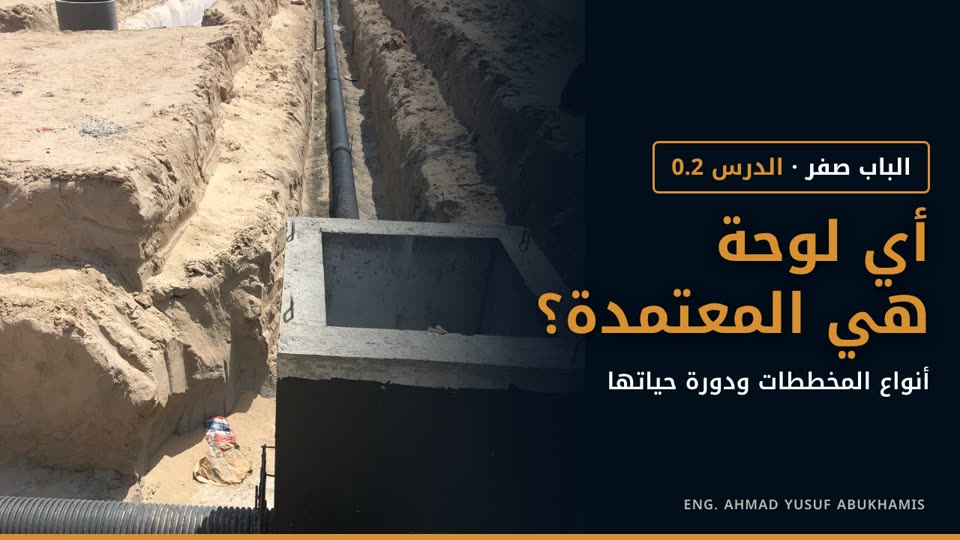
The difference between contract, shop and as-built drawings, and how to know the sheet in your hand is the latest approved one: numbering, revisions (REV), approval statuses and the anatomy of a sheet.
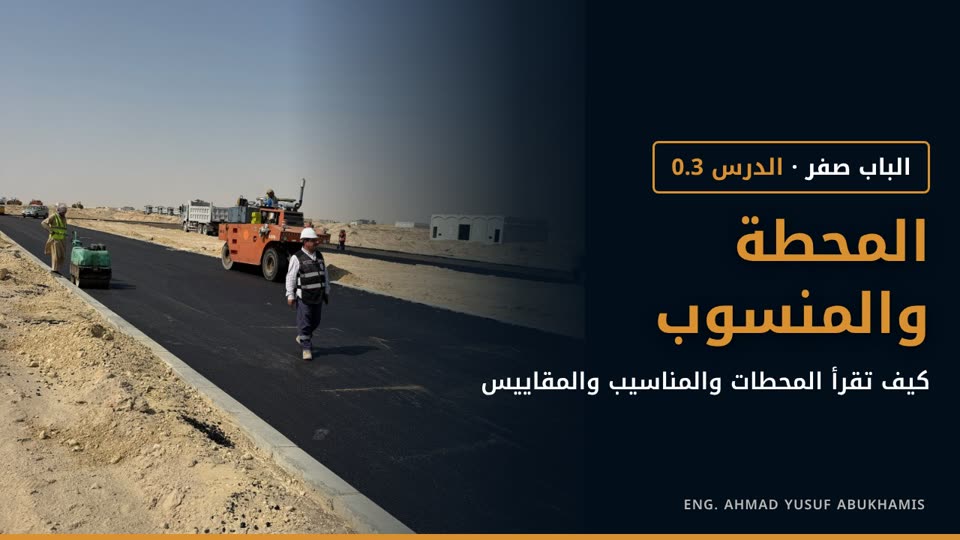
How to read the station, level and scale on any longitudinal profile, and why measuring a slope or depth with a ruler on the drawing goes wrong.
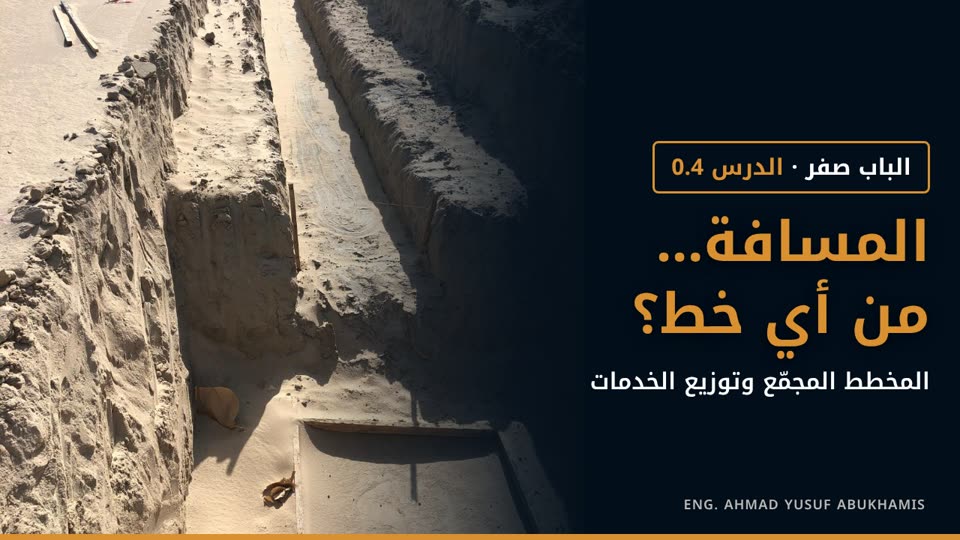
Where the water, sewer, stormwater, lighting and telecom lines sit across the road reserve, and how the composite plan reveals clashes before excavation.
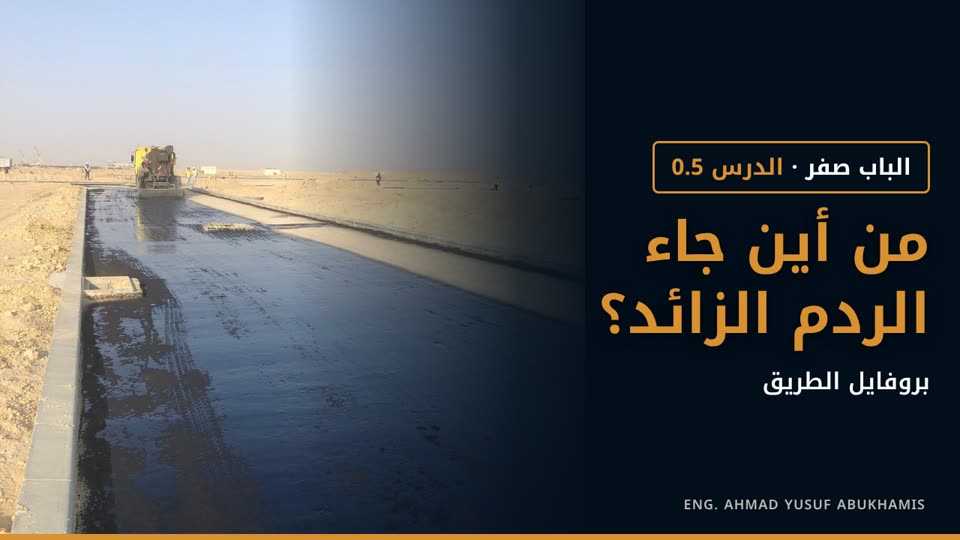
How to read a road profile: grades, vertical curves and design levels, and why actual ground levels are checked against the drawing before filling, with a worked example.
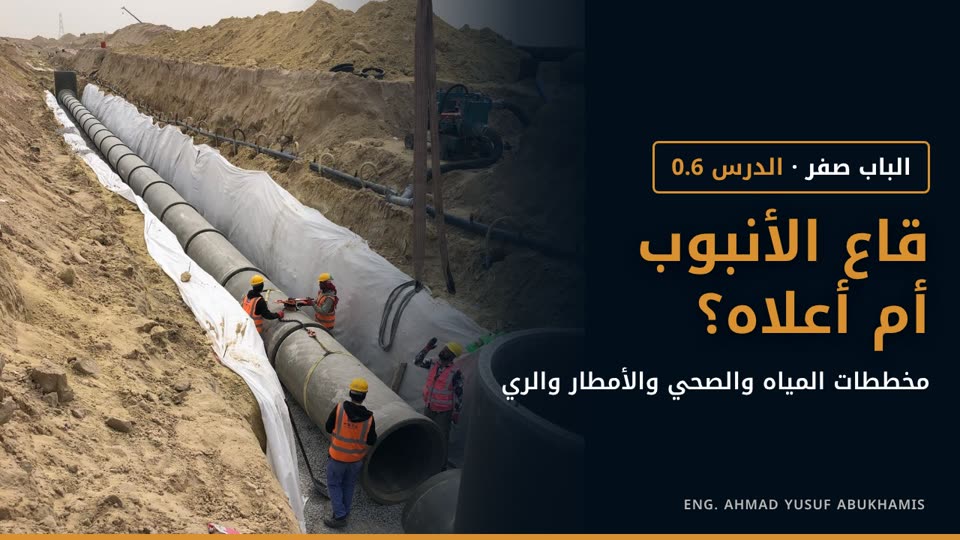
How to read water, sewer, stormwater, TSE irrigation and roundabout drawings, and what to look for on each sheet.
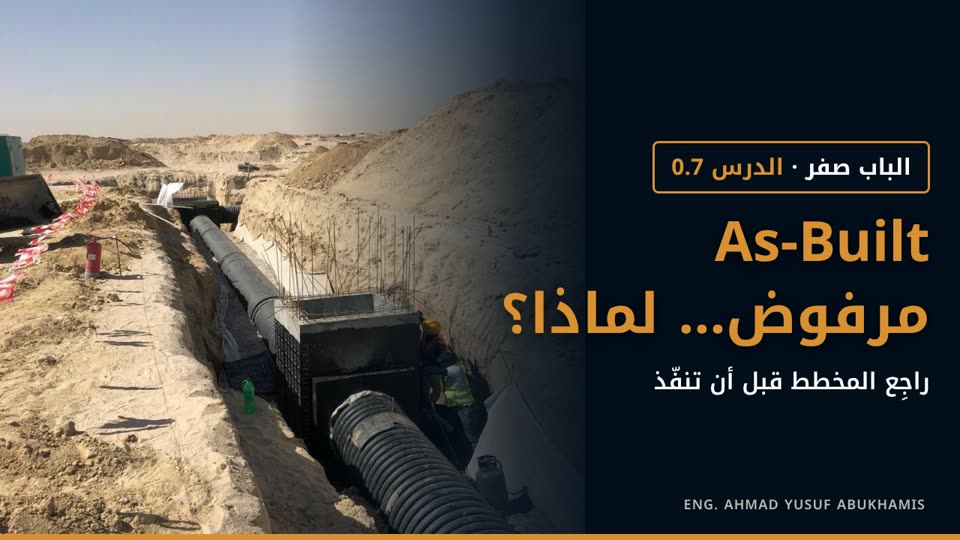
A method for reviewing drawings before construction, comparing revisions, and recording what was actually built in the as-built, and why an as-built that matches the design exactly gets rejected.
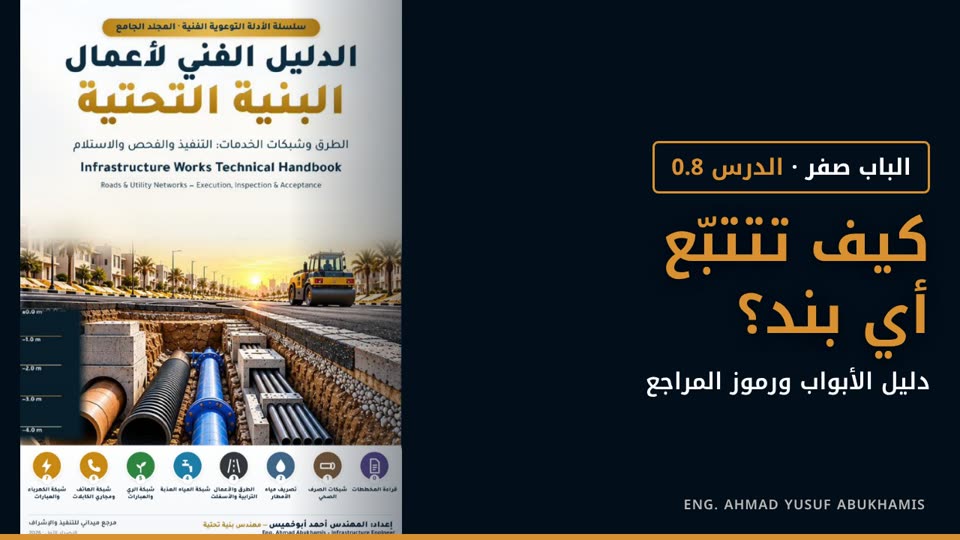
How to trace any item in the technical guide back to its source: page numbers, chapter guides, and specification and reference codes.
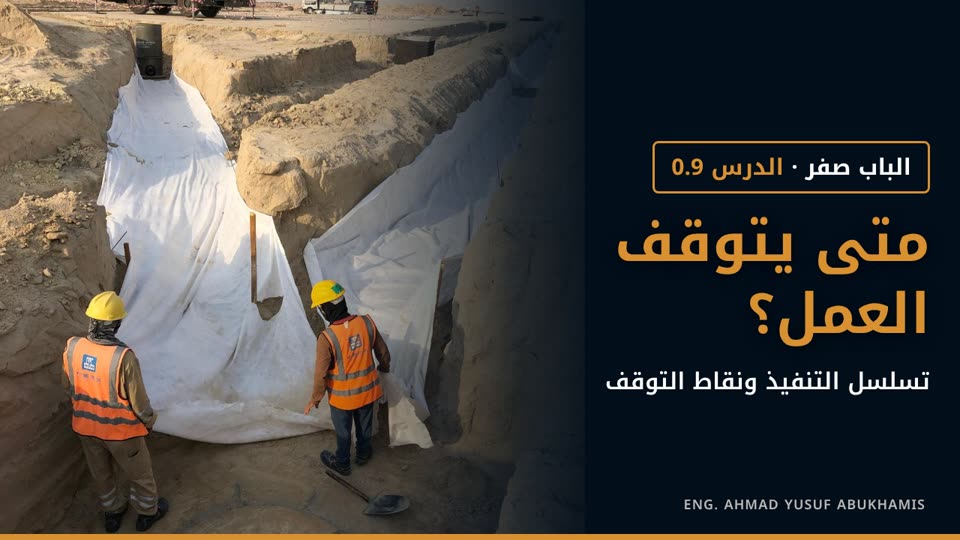
The execution sequence of a road project with its utilities, stage by stage: where work stops until supervision accepts it in writing, and what an inspection request contains.
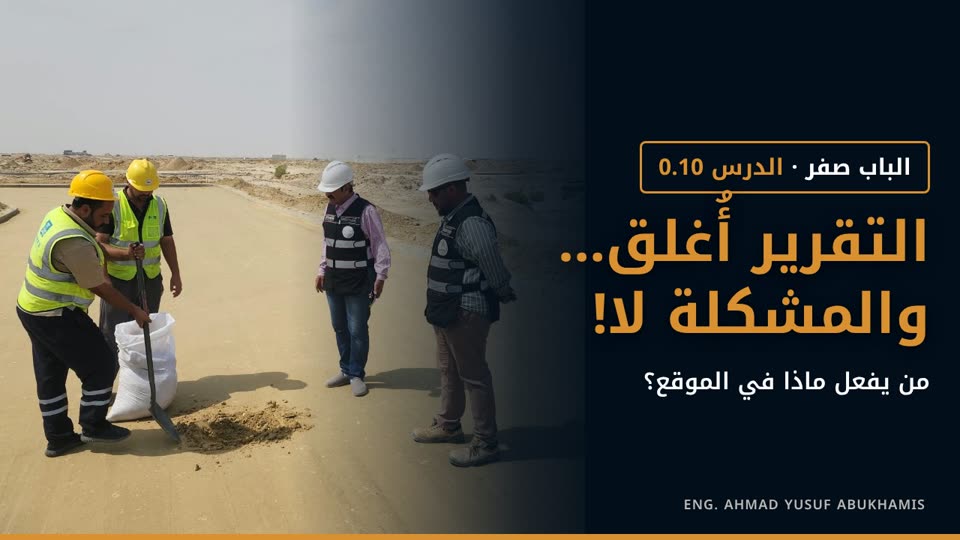
The roles of the contractor and the supervision consultant, when an NCR is opened and truly closed, when to send an RFI, and why the daily report matters. The last lesson of the free unit 0.
Field explanations on roads, networks, inspection and acceptance.